

Springtime Opera
artist
Wang Zhaoju
Media
size
years
Work Description
In Wang Zhaoju’s memory, the greatest joy of his boyhood was the rural opera performances staged during temple fairs. In the late 1970s, as village festivals gradually resumed, this ancient entertainment returned to the countryside, sparking his enduring bond with traditional opera. The vivid, resplendent stage scenes awakened his fascination with art and set him on a lifelong creative path.
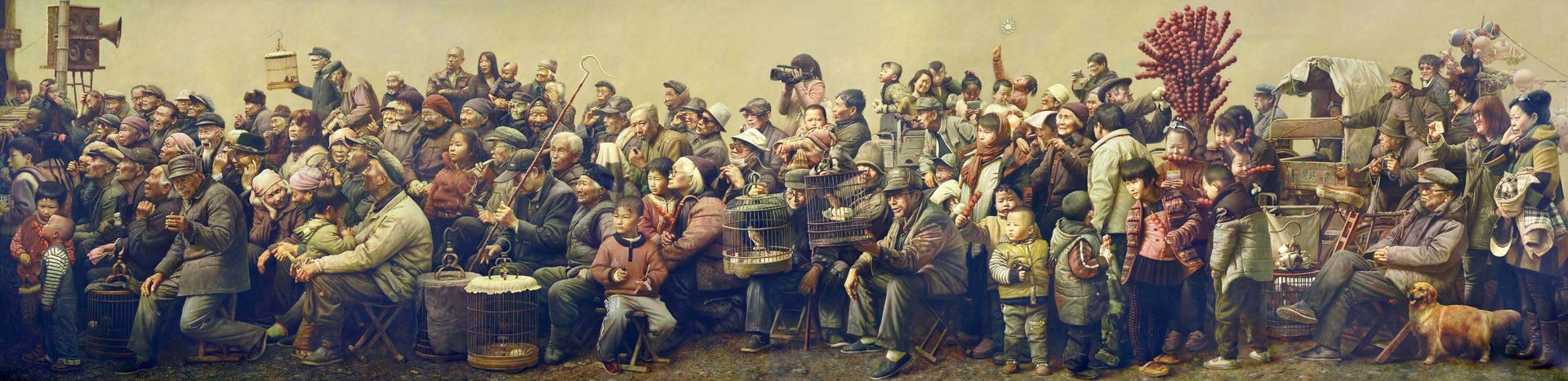
At around ten years old, his father took him on foot to a village several miles away to see his very first performance. The story—Fan Xitang (The Revolt Against the Western Tang)—depicted the heroine Fan Lihua in battle. He was mesmerized by the brilliant costumes and the expressive vitality of the painted faces. The clang of gongs and drums, the restless crowd, the excitement in unfamiliar faces—everything felt astonishingly new. From that moment, an inner impulse to create began to stir as he sketched and chased the figures in his imagination.
Springtime Opera is a reconstruction of those cherished rural memories and a tender homage to a homeland that has since faded. The painting features 108 figures—perhaps a subtle nod to the artist’s native Liangshan. Today, local opera has lost its former fervor, gradually receding under the tide of popular culture.
Through years of hardship, Wang’s father steadfastly supported him, even borrowing money and walking long distances to purchase art supplies. That quiet devotion gave Wang immeasurable strength. The dazzling beauty of the stage nourished his imagination, transforming childhood wonder into a lifelong dedication to painting. In honoring the old theater, this work also honors the soil that first gave root to his art.
Video